The morning bus I boarded from Kraków at 8 am in the morning and slipped easily into the morning traffic on a beautiful October day in 2024. It was a comfortable air-conditioned vehicle, with cushioned seats and free water, filled with the hushed murmur of travelers adjusting daypacks, sipping the bottled water, and scrolling through phones. I booked myself a tour from central Krakow to Auschwitz-Birkenau concentration camp and memorial museum with a stop at the Kompania Karna Kobiet, the women’s penal company. It was a steal at ten dollars for the whole transportation and information provided. Through the tinted window, southern Poland slid past wildflowers speckling the highway banks, modest brick cottages nestled behind woodpiles, and laundry hung suspended on clotheslines, fluttering lazily in the autumn breeze. It looked peaceful. It looked shockingly ordinary.
That mundanity was precisely what made it difficult to breathe.
I rested my forehead against the cool glass, gripped by the suffocating weight of the geography we were crossing. Decades ago, over a million human beings were funneled along this very route toward Oświęcim. They did not travel on cushioned seats with the cool air blowing on their faces gently to calm them from the scorching autumnal sun. They were jammed into windowless wooden freight cars, eighty to a hundred bodies pressed so tightly together that no one could sit and no one could fall the entire way, neither fully alive nor fully dead, holding onto a little hope and a lot of pain, just trying to see another day’s sun.
Some boarded those trains clinging desperately to a manufactured lie, a promise of fresh soil, new communities, and honest labor in the east. They brought with them what was left of their fragile heart’s hope along with heavy wool coats, family portraits, and jars of jam tucked into cardboard suitcases. Others climbed in paralyzed by an unspeakable dread, smelling the rot of reality long before the iron doors slid shut. Mothers held their babies close to their chests to muffle the sound of their weeping and trying to carve a sliver of safety. Whether the babies felt safe with the warmth of their mother’s bosom or the mother felt safe because of the smell of her own blood and sweat clinging to her, we will not know anymore. It was one of the most calculated, industrial erasures of human life our world has witnessed. And yet here I was, retracing the final hours of their lives from the comfort of a sightseeing tour bus.
A nauseating unease takes root when you travel toward someone else’s graveyard. The word “visit” or “tour” feels obscene when applied to a slaughterhouse. We step willingly into these “memorial houses and museums” driven by a desire to honor, to learn, and to pay our respects. Yet, there is an unavoidable friction in the privilege of being able to leave. We are permitted to enter these dark spaces which hold horrible memories and torturous spirits as spectators, knowing full well that when the afternoon ends, we will go back in our comfortable rides, buy a hot meal or a cold beer, and walk through cobblestone downtown alleys back to our warm beds.
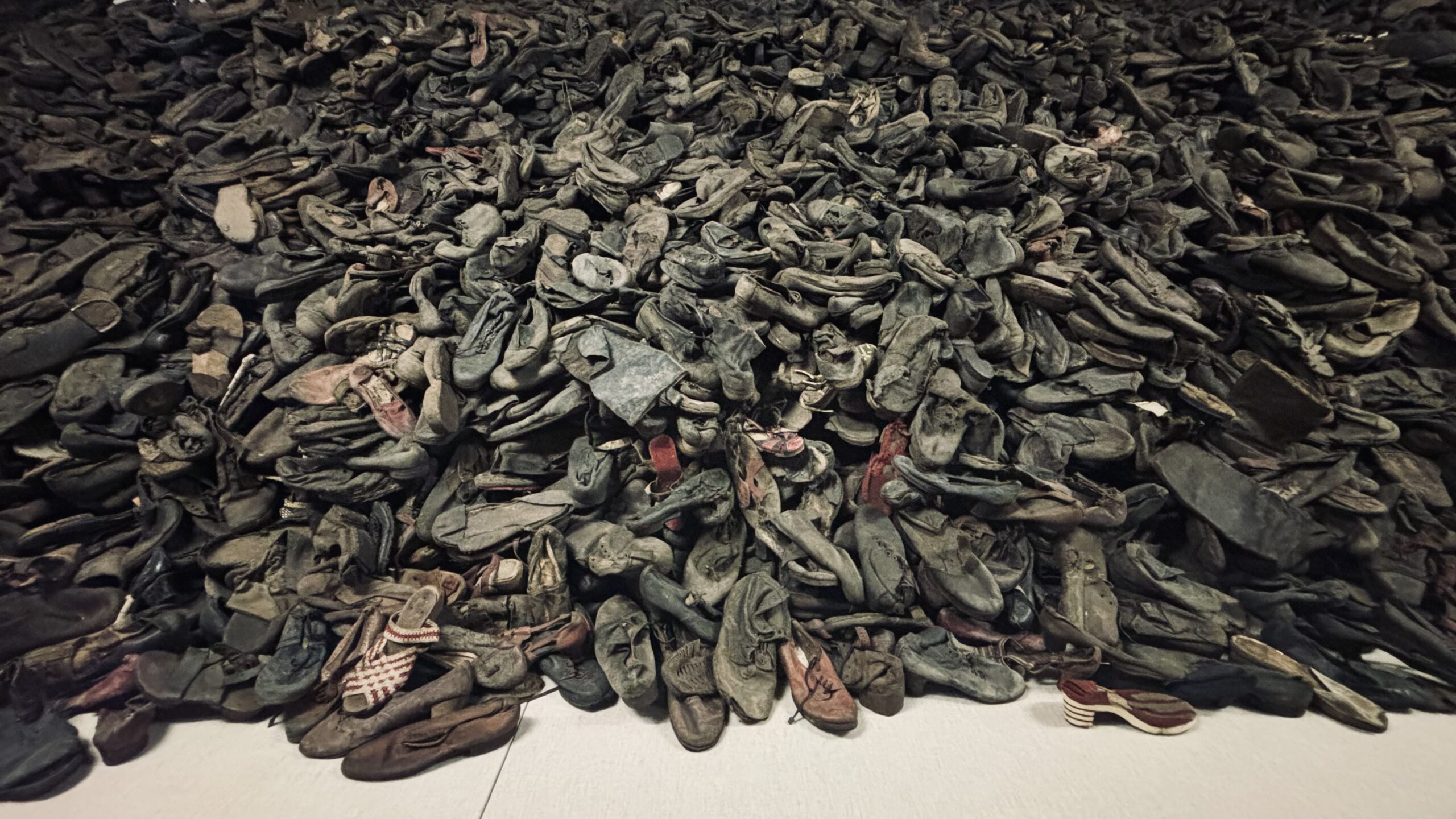
Once our bus arrived at the women’s penal company, I read through the history watched the tattered bras and pieces of clothing in glass cases, my stomach turned harder. At the Birkenau camp, I walked the same path from where the Jewish “prisoners” were dragged from the train tracks to the gas chambers. They were told they needed to shower after their long journey as they were ordered to undress and enter the gas chambers. I walked through areas where the remnants of their bones were thrown into piles. I cannot articulate the unsettling sense of imbalance I felt in my gut. At our last stop, which was the Auschwitz memorial museum, I walked through house after house of ghost stories from prisoners. When I finally reached the brick house that had displays of all the collected shoes, spectacles and the cut human hair that was used to stuff pillows. I couldn’t contain myself anymore. I rushed outside the brick house, grabbing hold of the staircase to keep from losing my balance, and started dry heaving. Once I stopped shaking, I sat on one of the stairs and started crying. Tears that I couldn’t explain refused to stop flowing out of my eyes.
Watching the reflection of my own face superimposed against one of the glass windows of the memorial, I felt a sharp, humiliating pang of perspective. In the cocoon of our everyday existence, we guard our grievances like godly relics. We nurture our melancholies, our bruised egos, and our domestic anxieties, convincing ourselves that our petty heartaches are profound tragedies worthy of sacred poetry. We treat minor inconveniences as existential wounds, living as if the world owes our delicate sensibilities a lifetime of comfort.
Travel, at its most honest, is a violent unmasking of that selfishness. Standing in front of the real remnants of atrocities built on nothing more than ordinary human cruelty, organized and unchecked, guts out those trivial self-absorptions that we hold on to as dire grievances. It strips away the luxury of self-pity and confronts us with what humanity is truly capable of when empathy is dismantled. The horror of Auschwitz is not merely a reminder that evil existed. It is reminder that it was organized, planned methodically, and exercised atrociously by ordinary people who believed that they were superior to other human beings or that the lives of certain group of people simply did not matter. And after 80 years, it still continues to happen quietly, wherever ordinary people decide someone else’s life matters less.
As my bus returned to the outskirts of Krakow, my heavy heart thickened. I left the bus, dragged myself to the nearest bar, and ordered a double shot of vodka. Visiting these places is uncomfortable, even agonizing, but discomfort is the minimum debt we owe to memory.