Windsurfing and Kitesurfing, UNESCO world heritage medina, Gnawa Music and local artisanal workshops and cooking
Essaouira doesn’t announce itself the way Marrakech does. There’s no snake charmers’ roar, no jostle for your attention the second you step off the bus. Instead, there’s wind: constant, salt-heavy, rattling the blue shutters of the medina, and the slow thump of waves against ramparts that have stood since the 18th century. Locals call it Essaouira, ‘the beautifully designed,’ and after three days here, I understood why. This is a town built for slow mornings, loud winds, and hands that still work in wood, wool, and silver the way they did generations ago. I spent over two months in this beautiful town and here’s a compact three day itinerary if you have limited time. If you are a slow traveler like me, you might just fall in love with the town.
Best Time to Visit
Essaouira is a year-round destination, but if you’re coming for surfing, then your itinerary should bend around the wind. The kitesurf season runs April through October, with the strongest, most reliable gusts from June to September. The wind that regularly hits 20–30 knots in peak summer. If surfing (not kiting) is more your speed, December to March brings bigger swells and calmer wind, which beginners tend to find more forgiving.
If you want Essaouira at its loudest and most alive time, plan your trip around the Gnaoua World Music Festival. The town’s biggest event of the year, the Gnaoua Music Festival, draws hundreds of thousands of visitors for three days of Gnaoua music, fusion sets, and street performances that spill out of every square and rampart. The 2026 edition ran June 25–27; the 2027 edition is scheduled for June 24–26. Book accommodation well ahead if you’re planning around it as the medina’s riads fill up fast.
Okay, now let’s jump into the 3 day itinerary.
Day 1: Medina Wander & Cooking Class
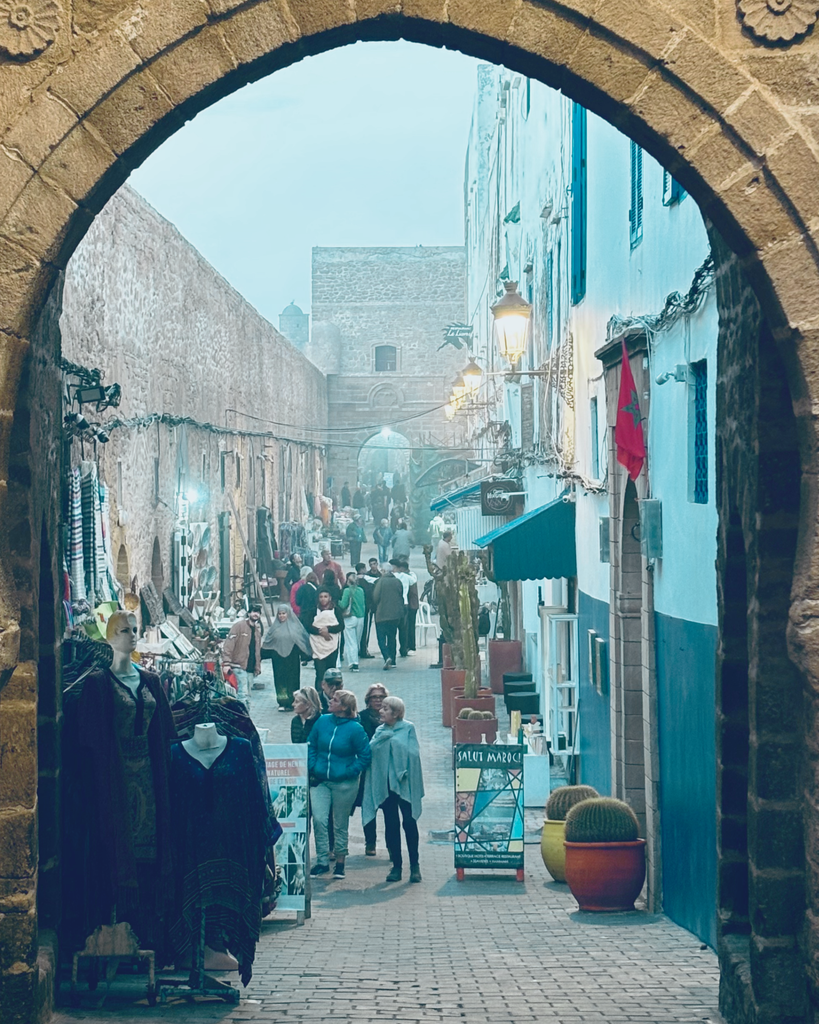
Essaouira’s medina is a UNESCO World Heritage site, and unlike Marrakech’s souks, it’s compact and genuinely walkable. You can cover most of it without a guide and without getting hopelessly lost. Starting here also means you can scope out and book a kite school in person for tomorrow, rather than booking blind online.
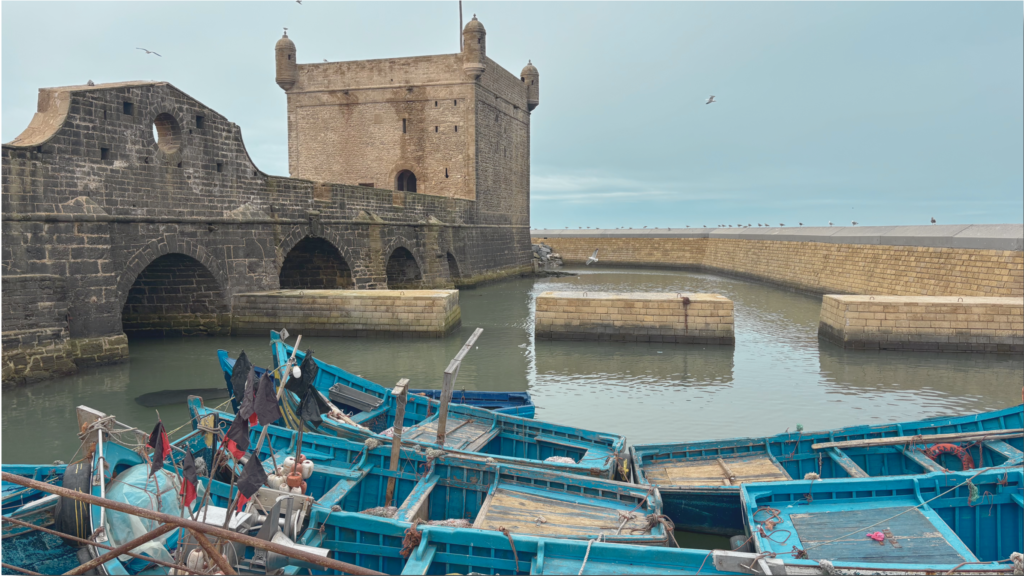
- Morning: Start at Skala du Port, the old fishing harbor, before the day’s catch gets hauled off. Wander into the medina through Bab Doukkala and let yourself get a little lost in the blue-and-white lanes.
- Mid-morning: Browse the souks: spice stalls, thuya wood carvings, and woven textiles cluster along the main souk streets. Swing by a kite school or two along the way and book tomorrow’s lesson in person, which makes it easier to ask about conditions and get a feel for the instructors.
- Midday: Join a hands-on Moroccan cooking class, offered by several riads and dedicated cooking schools in the medina. Most start with a market visit to pick ingredients, then move into cooking a tagine, fresh bread, and salads as a group. You can book a cooking class via Airbnb, GetYourGuide, or even through your local accommodation.
- Afternoon: Eat what you cooked, usually included in the class price, then find a rooftop café overlooking the ramparts for mint tea or Arabic coffee while the afternoon light turns gold.
- Evening: walk the Skala de la Ville sea walls as the sun drops into the Atlantic. This is the best place to enjoy the sunset and it’s worth the crowd.
Day 2: Kitesurfing Essaouira Bay
Essaouira earned its nickname ‘Wind City of Africa’ honestly, and the bay just south of the medina is one of the best beginner-friendly kite spots on the Atlantic coast. The wind blows side-shore, which keeps you safely parallel to the beach rather than pushing you out to sea.
- Morning: Head to Essaouira Bay if you’re new to kiting, or Sidi Kaouki (20 minutes south by taxi) if you want more space and stronger gusts, for the 3–4 hour lesson.
- Midday: Refuel at a beach shack near the launch spot: grilled sardines or a fish tagine, eaten with sandy fingers, is the true experience.
- Afternoon: The wind tends to build after 1pm, so stronger riders can squeeze in a second session while beginners rest sore forearms.
- Evening: Head back into the medina for dinner, legs tired and salt-crusted. You will appreciate the slow of the town as it provides the perfecting resting place for your tired legs. If you’re lucky you will witness street Gnaoua performer. You can also look up restaurants with live Gnaoua music.
| If the wind doesn’t cooperate Build in a half-day buffer: Essaouira’s wind can shift fast day to day, even within the reliable April–October season. If your lesson gets bumped, swap in a visit to Skala du Port to watch the blue fishing boats unload the morning catch, or start Day 3’s workshops early. Ask your kite school about rescheduling when you book in person on Day 1. Most build weather flexibility into multi-day packages. |
Day 3: Artisanal Workshops
Essaouira has quietly stayed one of Morocco’s last strongholds of traditional thuya woodworking: a fragrant, burl-grained wood that grows almost nowhere else on earth outside this corner of Morocco. Spend your last day with the people keeping that craft, and a few others, alive.
- Morning: visit a Thuya woodworking cooperative near Bab Doukkala or along Skala du Port, where artisans hand-carve and inlay the burl wood into boxes, chess sets, and furniture. Many workshops let you watch the process up close, and some offer a short hands-on try.
- Late morning: stop at a women’s argan oil cooperative to see the traditional hand-crushing process, still done by hand here, unlike the mechanized operations elsewhere in Morocco. Taste Amlou, the argan-almond-honey spread that’s worth packing a jar of. I personally devoured a few jars during my times there and carried them as presents for all my friends at my next destination.
- Midday: A simple Berber omelet or a bowl of Hariri from a medina stall may just fill your heart and your belly.
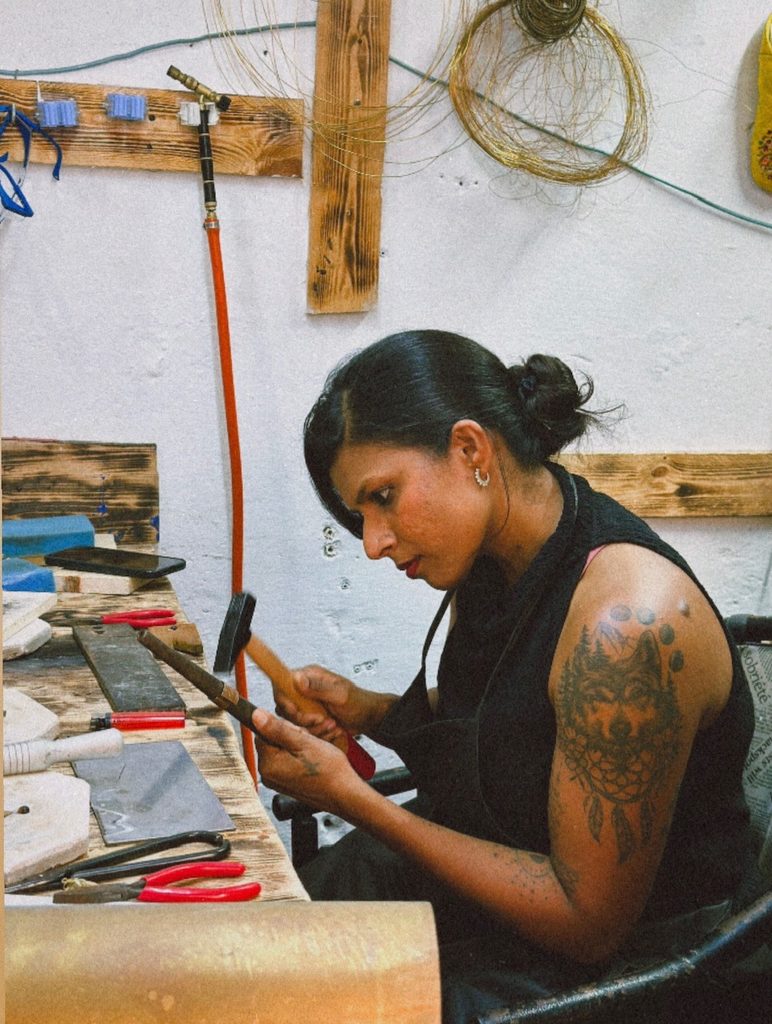
- Afternoon: duck into a silversmith’s atelier or a rug-weaving workshop. Both crafts have been passed down through generations of Essaouira families, and most artisans are happy to talk through their technique if you ask.
- Evening: Take time to enjoy the sunset by the beach or a rooftop cafe, stroll lazily around teh medina streets trying local fruits and sweets. Finish your souvenir shopping, or follow the sound of a drum circle: live Gnawa music turns up in cafes and squares more often than you’d expect, festival or not.
Where to Eat
- Mimti: The best spot in Essaouira to get locally sourced farmed to table experience supporting local women cooking their hearts out for you in the kitchen.
- Fishburger Essaouira: rooftop views with different fish options, comfort food with a modern take.
- L’Atelier Café: laid-back cafe with great coffee and cake option, also a great sport to get unique, beautifully crafter souvenirs.
- KSOU Rooftop Restaurant: elevated Moroccan food with a rooftop view and live music, worth the splurge for a Day 2 dinner.
- Cafe L’Esprit: hidden in the medina lanes, a great spot for lunch, or a coffee while taking time to relax, journal or enjoying the quieter medina ambience.
- Umia: High end restaurant for last night’s dinner splurge with beautiful ambience, well crafted dishes and drinks.
Where to Stay
The medina is the best base for this itinerary: everything in this guide is walkable from it, apart from the kite spots. Here are four solid options across budget ranges:
- Riad Kafila (budget) — a well-reviewed, simply decorated riad inside the medina walls — good value and close to the souks and gates.
- Ryad Watier (mid-range) — a traditional riad built around a quiet courtyard, known for slow, old-world Moroccan architecture and a calmer pace.
- Le Palazzo Hotel (mid-to-upper) — in the Kasbah district with sea views; especially well-suited to families or anyone wanting a bit more space.
- Le Médina Essaouira Thalassa Sea & Spa — MGallery (luxury) — a beachfront hotel with a spa and thalassotherapy centre, a short walk from the medina — the pick if you want full resort comfort after days of wind and walking.
What to Pack
- Windbreaker or light jacket: Essaouira stays breezy and noticeably cooler than inland Morocco, even in summer.
- Rash guard or swimwear you can move in: for the kitesurf lesson; most schools provide wetsuits, but check when you book.
- Comfortable walking shoes: the medina’s cobblestones are charming and also uneven.
- Modest layers for the medina: a scarf or light cover-up is useful for workshop visits and cooperatives, out of respect for the artisans hosting you.
- Cash (dirhams): many souk stalls, workshops, and small eateries don’t take cards.
- Sunscreen and a hat: the wind masks how much sun you’re actually getting.
- A dry bag or Ziplock: to protect your phone and camera during the kite lesson.
Practical Notes
- Getting around: the medina is entirely walkable. Sidi Kaouki requires a taxi or your kite school’s shuttle (about 20 minutes).
- Book ahead: accommodation if your trip overlaps with the Gnaoua Festival in late June, riads fill up fast.